

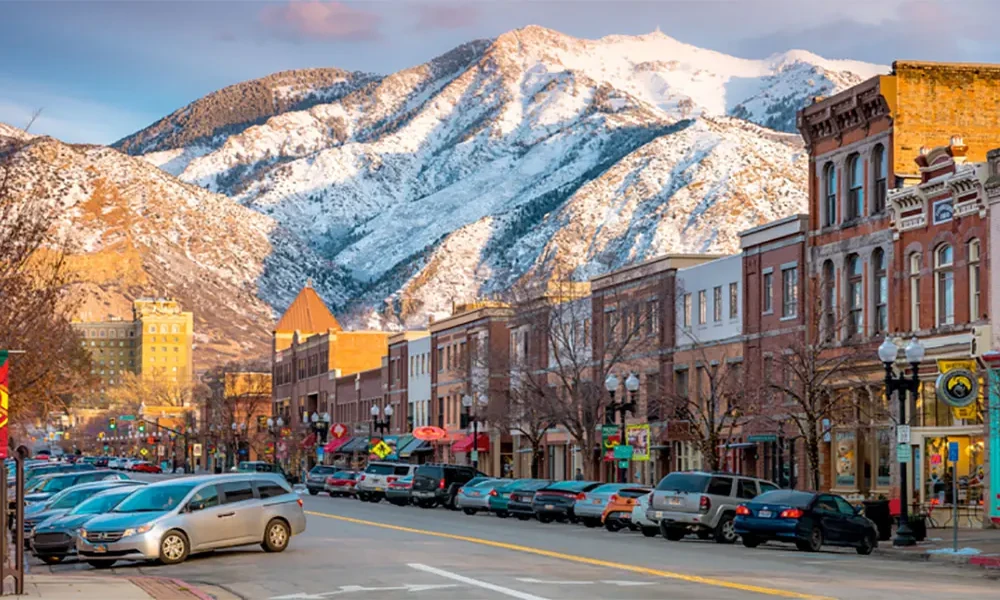
Here’s a number worth sitting with: according to a 2025 analysis of U.S. Census migration data reported by Fox News, 76% of Americans who relocated that year said better access to outdoor lifestyles was a primary motivator. Not a secondary one. The primary one. That’s a staggering share of people betting their mortgage on a lifestyle they often have not tested for longer than a ski weekend.
Mountain towns are genuinely compelling. But “compelling” and “right for you” are not the same thing. Plenty of buyers fall in love with a postcard version of a place and discover, two winters in, that they miss Thai food at midnight, that broadband drops during every important call, and that the 45-minute grocery run is a lot less charming in February than it sounded in June. This article is a framework for pressure-testing that decision before the wire transfer clears.
The Lifestyle-Market Fit (LMF) Framework
Most buyers evaluate mountain towns on two tracks: do I love it here, and can I afford it? Those are necessary questions, but they are not sufficient. The real decision has three dimensions, and missing any one of them tends to produce regret.
Lifestyle fit asks whether your actual daily habits, not your vacation habits, translate to mountain life. Market fit asks whether the specific property type you need exists in that market at a price that makes financial sense for your situation. Friction tolerance is the one most buyers skip entirely: it asks how you genuinely respond to inconvenience, seasonal isolation, and the absence of urban infrastructure. All three have to clear the bar.
Run each dimension honestly before you start touring homes. If you score yourself high on lifestyle fit but have never actually wintered somewhere without a Costco within 20 minutes, that score is fiction.
What the Market Data Actually Tells You
Mountain town real estate does not behave like suburban real estate, and understanding that distinction saves buyers from pricing surprises. Take southwestern Colorado as an example. The Durango Herald reported in January 2026 that the median sale price for homes in La Plata County rose 2.8% in 2025, even as in-town Durango saw an 8.5% price decline. Same county, dramatically different trajectories depending on where exactly you buy.
That split matters for buyers. A county-wide median can mask significant variation between a walkable downtown neighborhood, a rural canyon property, and a ski-resort condo. In a market like this, the price per segment breaks down roughly as follows:
| Property Segment | 2025 Approximate Median | Buyer Profile |
|---|---|---|
| In-town single-family | $850,000 | Full-time residents, walkability priority |
| County-wide residential | $690,000 | Mix of local and relocation buyers |
| Condo / townhome | $545,000 | First-time buyers, lock-and-leave second homes |
| Mountain resort area | $1,592,000 | Luxury, seasonal, and ski-access buyers |
Source: Durango Area Association of Realtors, 2025 annual statistics.
The takeaway here is not that any segment is overpriced or underpriced. It’s that your budget may fit one segment perfectly and be completely misaligned with another. A buyer who walks into a mountain town expecting a certain lifestyle at a county-level median price often discovers that the lifestyle they actually want, walkable, in-town, close to restaurants and services, costs substantially more than the headline number.
Four Questions That Reveal Your Real Friction Tolerance
This is where honest self-assessment does more work than any amount of market research. These four questions are not rhetorical. Write your answers down.
- Have you spent at least two weeks in the town during its hardest season? Not a holiday trip. A work week, including a day when the roads were bad and the coffee shop was closed. If the answer is no, you have not tested the place.
- What is your actual plan for grocery runs, medical appointments, and airport access? Many mountain towns are 60 to 90 minutes from a major hospital or a regional airport. That math changes fast when someone in your household has a recurring appointment or travels for work every other week.
- Does your income depend on reliable high-speed internet? Connectivity varies enormously within mountain markets, sometimes block by block. Before you make an offer, get the actual upload and download speeds at that specific address during peak hours, not the provider’s advertised estimate.
- How does your household handle six weeks of gray weather with limited social infrastructure? Mountain towns in shoulder season can feel remote in a way that feels peaceful to some people and genuinely isolating to others. Neither response is wrong. But you should know which one is yours.
The Case for Going Deep Before You Go Wide
A common buyer mistake is researching a dozen mountain towns at a surface level rather than one or two at genuine depth. You end up with a Pinterest board full of views and no useful information about how schools are structured, what the HOA rules look like on that specific condo complex, or whether the neighborhood flood-zones on the county map affect your insurance options.
Depth beats breadth here. Pick two towns that genuinely match your friction tolerance and your budget segment, then go granular. Talk to people who have lived there for ten years, not just the ones who moved in 18 months ago and are still in the honeymoon phase. Read the local paper. Attend a town council meeting if you can. These are not romantic moves, but they are the ones that tend to produce buyers who are still happy with their decision four years later.
Fox News reported in 2026, citing Stora’s analysis of U.S. Census migration data, that nearly 15 million Americans relocated in 2025, with 88% citing cost savings as a primary motivation and 76% seeking better outdoor lifestyle access. That’s a lot of people making the same general bet. The ones who do it well are the ones who researched the specifics, not just the scenery.
Using Local Resources the Right Way
Once you’ve pressure-tested your answers to the questions above and you’re genuinely serious about a specific market, local expertise becomes essential rather than optional. A national search portal gives you listings. A local broker gives you context: which neighborhoods lose cell service in winter, which roads get deferred on the county plow schedule, which HOAs have upcoming special assessments.
If you’re evaluating La Plata County in Colorado, resources like the helpful FAQs for home buyers in Durango offer the kind of market-specific guidance that no algorithm surfaces on its own. That depth of local knowledge is what separates a confident purchase from a stressful one.
The general principle holds regardless of which mountain town you’re considering. Get local. Not just in terms of who you hire, but in terms of what you read, who you talk to, and how you spend your time before you make an offer.
A Practical Pre-Offer Checklist
Before you move from “serious interest” to “let’s write an offer,” run through this list. It’s not exhaustive, but it catches most of the surprises that derail buyers or produce regret.
- Confirmed actual internet speeds at the property address, not the neighborhood average
- Driven the route to the nearest grocery store, urgent care clinic, and airport at least once in real conditions
- Reviewed the HOA financials and reserve fund if buying in a condo or planned community
- Checked the county assessor’s site for the property’s tax history and any pending special districts
- Spoken with at least two neighbors who have lived there year-round for more than three years
- Confirmed your specific broadband, cell, and streaming service availability, not just general coverage maps
- Spent time in the town during both peak and off-peak seasons before submitting an offer
Mountain towns reward buyers who do the work upfront. The lifestyle is real, the community can be extraordinary, and the equity story in markets like La Plata County has been durable over time. But none of that offsets buying the wrong property in the wrong segment for the wrong version of your life. Know your friction tolerance. Go deep on two markets instead of shallow on ten. And trust local expertise once you’ve narrowed down your choice. That sequence, in that order, is what separates the buyers who thrive from the ones who quietly list again two years later.