

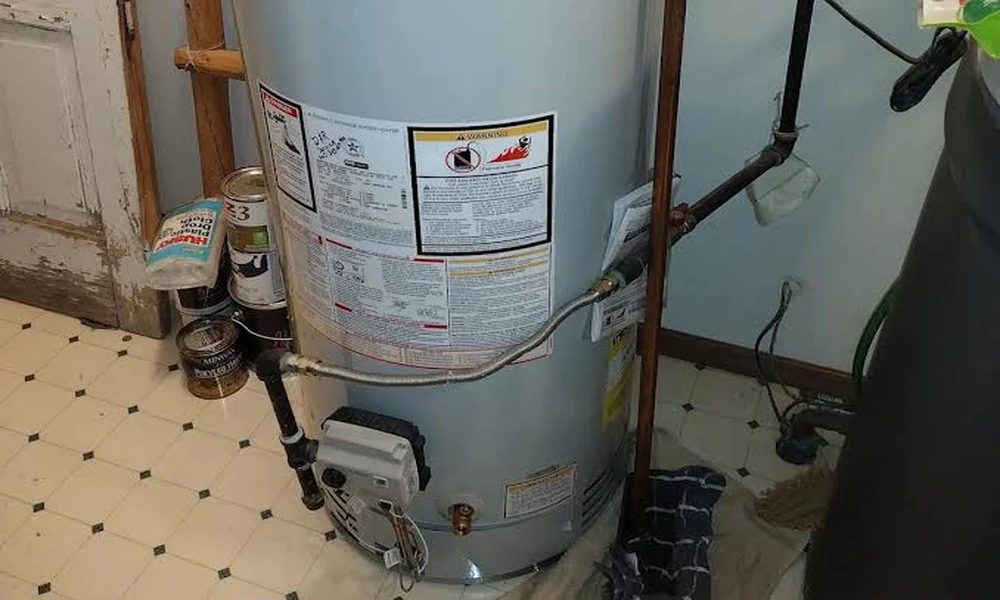
Your water heater loses about a millimeter of steel every year it sits in Madison tap water, and you’ll never see it happen. What you will see is a rumbling tank, a shower that runs hot for six minutes instead of twelve, and a repair bill that shows up at the worst possible time.
Most homeowners blame the heater itself. The real culprit is usually what’s flowing through it. Wisconsin sits on some of the hardest groundwater in the country, and that mineral load settles onto heating elements and tank floors as scale. Once you understand how that process works, the fix becomes obvious. Plumbers who handle both water heater repair and softener installation see the pattern constantly: a tank that’s technically still alive but working twice as hard as it should. Here’s how to spot the damage early and decide what to do about it.
What Hard Water Actually Does Inside the Tank
Hard water carries dissolved calcium and magnesium. Heat drives those minerals out of solution, and they bond to the hottest metal they can find. In a tank heater, that’s the heating element or the burner plate at the bottom. In a tankless unit, it’s the heat exchanger coils.
Scale doesn’t conduct heat well. Picture wrapping a blanket around a stove burner and then asking it to boil a pot of water. The burner fires longer, burns hotter at the surface, and wears out faster. That’s exactly what happens in a scaled tank. You pay more on your gas or electric bill, wait longer for hot water, and shorten the unit’s lifespan.
The EPA notes that hard water is common across large parts of the country and is not a health concern, but the EPA also makes clear that mineral content varies widely by region. In Wisconsin, that variation is real even between neighborhoods on different wells.
Four Symptoms That Separate Hard Water Damage From a Dying Heater
Not every strange noise means the tank is finished. Here’s the diagnostic ladder I’d walk through before calling anyone.
- Rumbling or popping from the tank. That’s trapped steam under a scale layer, and it almost always points to sediment buildup.
- Hot water that runs out faster than it used to. A tank full of sediment holds less actual water. The capacity shrinks even though the label hasn’t changed.
- Rust-colored water from hot taps only. If cold water runs clear and hot water doesn’t, the corrosion is inside the tank or the anode rod has given out.
- Lukewarm water that cycles hot and cold. A thermostat fighting against scale deposits will overheat, cut out, and repeat.
If you’re seeing two or more of those at once, stop running the unit and get eyes on it. Ignoring a leaking tank is how a twenty minute repair turns into a flooded basement and a Saturday emergency call.
Why I’d Fix the Water Before Fixing the Heater
Here’s my opinion, and it’s not a popular one with people who just want the cheapest visit: putting a fresh heater on hard water without softening is throwing money at a problem you haven’t solved. You’ll be back in the same spot in a few years.
A water softener swaps calcium and magnesium for sodium through ion exchange. Once the scale load drops, everything downstream behaves better. The heater runs less, the dishwasher stops spotting glasses, and your showerheads keep their pressure. The Department of Energy’s consumer resources explain how water heating accounts for a significant slice of a typical home’s energy use, which is exactly why Energy.gov treats water heating efficiency as a real household cost lever rather than a footnote.
So the sequence I’d recommend for anyone with a scaled tank is repair first if the unit is salvageable, then soften the supply so the repair holds.
A Practical Walkthrough of the Repair Decision
You don’t need to diagnose the heater yourself. You do need to know what you’re agreeing to. Use this as your checklist when a plumber is standing in your basement.
- Confirm the age of the unit. Most tank heaters last somewhere around a decade, less on hard water. If yours is past that mark and leaking, replacement usually wins.
- Ask for the anode rod condition. The sacrificial rod is what protects the tank from rust. A worn-out rod explains rusty hot water, and it’s a cheap part to swap before the tank fails.
- Request a flush and descale. Sediment can be pulled out of a working tank. It won’t undo corrosion, but it restores efficiency and quiets the rumbling.
- Get the softener assessed at the same time. A softener that isn’t regenerating correctly is doing nothing for you, and it’s easy to check in the same visit.
- Ask about a maintenance interval. Annual flushing is the single cheapest thing you can do, and it takes less than an hour.
Get all five answers in writing. If a technician can’t tell you the anode rod condition or won’t test the softener, find someone who will. That’s not a high bar.
Signs Your Softener Needs Attention Too
Softener failures are quieter than heater failures. Watch for soap that won’t lather, white film on faucets, or a salt tank that never seems to use salt. Slippery-feeling water is normal and expected. Water that suddenly feels the way it did five years ago is not.
The Bureau of Labor Statistics tracks plumbing as a skilled trade with steady demand, which tracks with what most homeowners already suspect: BLS data shows these trades stay in demand because the work requires hands-on judgment, not guesswork. Softener sizing is a perfect example. A unit that’s too small for your household runs out of capacity mid-week and silently passes hard water straight to your heater.
What This Means for Your Basement This Year
Hard water damage is slow, which is exactly why it’s easy to ignore until the tank lets go. The rumbling, the shortened showers, and the rusty water are all early warnings, and every one of them has a fix that costs far less than a replacement.
So here’s your move. Go check the age sticker on your water heater tonight and listen for a rumble while a hot tap is running. If either one gives you a bad feeling, get a plumber out for a real inspection before the cold season arrives. What’s in your water right now, and how long has it been in there?