

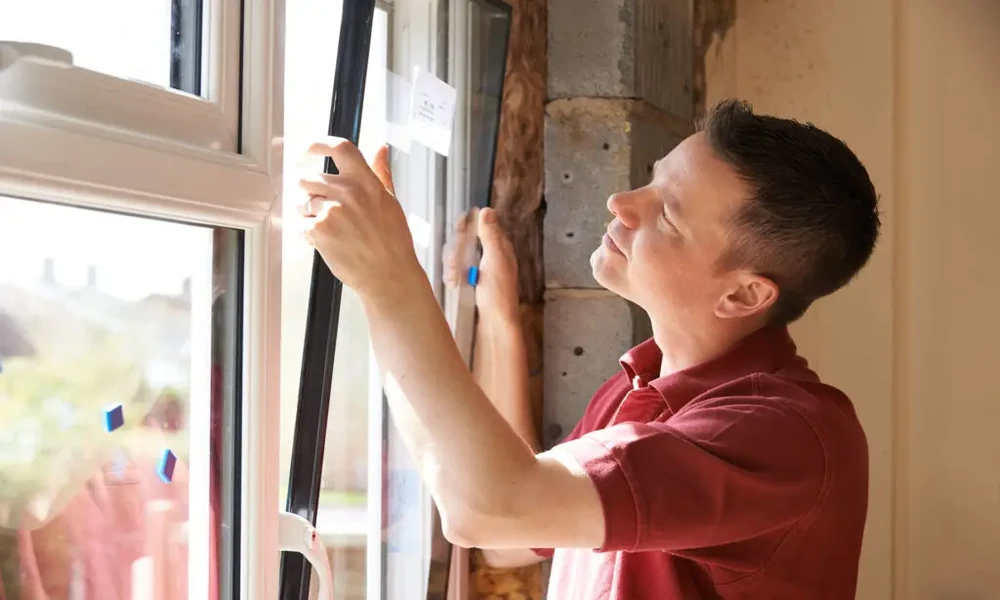
Most homeowners replace their windows about two years later than they should, and I get why. The house still keeps you warm. Nothing has actually broken. So you wait, and you keep adjusting the thermostat, and by the time you call somebody you have already paid for the replacement in utility bills you will never get back.
I walked a neighbor through this last spring. She was convinced her 1998 vinyl windows were fine because none of them leaked when it rained. Then I put my hand on the frame near her kitchen sink on a January morning and felt cold air moving past my fingers like a slow leak in a tire. She ordered custom replacement windows in Scottsdale AZ the following month. Here is how she got to that decision, and how you can run the same check on your own house this weekend.
Windows fail in four different ways, and only one of them is obvious
People tend to lump every window problem into one bucket called “old.” That is a mistake, because each failure mode has a different fix, a different cost, and a different timeline. I think in terms of what I call the Four Faults, and once you learn them you will never look at a window the same way again.
- Seal failure. The glass itself has gone bad. You see fog, haze, or a milky film trapped between the panes.
- Frame failure. The sash or frame has warped, cracked, or rotted. The glass might still be perfect.
- Hardware failure. Cranks strip, locks stop lining up, sashes drag or refuse to stay open.
- Air failure. Nothing looks wrong, but the window no longer stops air movement. This is the quiet one.
Two of those faults, frame and seal, usually mean the window is done. The other two are sometimes worth repairing. That distinction alone saves people thousands of dollars, and it is the single most useful thing I can tell you.
How old are your windows, really?
You need a birth date before you can judge anything. Check the inside of the sash for a manufacturer label, usually stamped near the bottom edge or in the channel where the sash slides. If the label is gone, pull the original home listing photos or ask the previous owner when they last replaced anything.
Age matters because component life is fairly predictable. According to the U.S. Department of Energy, windows are one of the largest sources of heat loss in a typical home, and older single-pane units perform far worse than modern double or triple pane assemblies. That is a broad baseline, not a magic number, but it tells you the direction things move as a house ages.
Here is my rough guide, and I will be honest that it is rough:
- Single pane wood windows: expect real problems past 25 to 30 years.
- Early double pane vinyl: seal failure commonly shows up between 15 and 25 years.
- Aluminum frame sliders: hardware and thermal issues, often 20 to 35 years.
- Anything with visible rot or soft wood: age is irrelevant, deal with it now.
Why some windows die early and their neighbors do not
Two identical windows installed on the same day can fail a decade apart. Orientation, shade, and how hard the sun hits that particular elevation all matter. A west facing window in a hot climate bakes every afternoon and stresses its seal far more than a north facing one that never sees direct light.
Construction standards matter too. The National Institute of Standards and Technology maintains the reference standards and test methods that window products are measured against, which is why two windows with the same dimensions can perform very differently depending on how they were built and rated. When you are comparing quotes, the rating matters more than the sales pitch.
Same house, same install date, two very different lifespans. That is not a defect. That is physics, and it is why a room by room inspection beats a whole house gut feeling every time.
The five minute test you can run today
Grab a candle, a sheet of paper, and thirty minutes. I have run this test on dozens of houses and it has never once failed me.
- Candle test. On a windy day, hold a lit candle a few inches from the frame seams and the sash edges. If the flame flickers, you have an air fault. Do not do this near curtains.
- Paper test. Close the window on a dollar bill or a strip of paper, then try to pull it out. If it slides free with almost no resistance, the weather seal is gone.
- Hand test. Run your palm slowly around the entire perimeter on a cold morning. Your skin finds leaks that your eyes cannot.
- Glass test. Look sharply at the pane from a low angle in direct light. Haze, streaks, or a trapped fog pattern means the seal is failing.
- Sash test. Open and close the window fully. Grinding, sticking, or a sash that will not stay where you put it points at hardware or frame trouble.
Write down which windows fail which test. That list becomes your scope of work, and it gives you a serious negotiating position when you start getting quotes. Nobody can upsell a whole house to someone holding a specific list.
Watch for the joint trick
Here is something a contractor taught me years ago and I have never forgotten. Take a strip of invoice tape, the paper kind you get from an office supplier, and press it across the joint where the sash meets the frame. Leave it overnight. If moisture darkens the tape in the morning, you have active water intrusion at that joint. If the tape stays dry, the problem is air only and the fix is often simpler.
That single trick once saved a homeowner I know from replacing seven windows she did not need to replace. Water intrusion at one joint is a repair. Water intrusion at ten joints is a replacement, and a pattern like that usually points to installation problems rather than the windows themselves.
The replacement math, honestly
Nobody replaces windows because it is fun. They do it for comfort, for curb appeal, and for resale. According to the U.S. Census Bureau, housing stock in most American metro areas is aging, and older homes make up a growing share of the market. Translation for a homeowner: buyers are looking at window condition harder than they used to, because it is one of the few visible signals of how well a house has been maintained.
Here is the stance I would take if it were my house. If you have one or two windows with minor hardware issues, repair them, live with them, save the money. If you have seal failure in windows on the sunny side of the house, and you intend to stay another five years, replace them and stop paying the utility company for the privilege of being uncomfortable.
Do not replace windows purely for the resale bump unless the windows are actually failing. Real estate agents will tell you plenty of stories, but appraisers look at condition, not marketing copy. Fixing what is broken is a defensible investment. Fixing what is not broken is a renovation you did for yourself, and that is fine if you are honest about the reason.
Getting quotes without getting played
Call three companies, but do not call them on the same day and do not sign anything at the first appointment. Bring your written list of failing windows. Ask each contractor which windows they would replace and which they would leave alone, and pay close attention to whether their answer matches yours. A company that agrees with your list has actually looked at your house.
A company that insists on all of them has not.
Ask what glass rating goes in each opening, ask how they handle the frame joint, and ask what happens if a seal fails in year six. The answers will separate companies fast, and you will not need to rely on anyone else’s opinion to hear the difference.
Your old windows are talking. Start listening
Windows give you plenty of warning before they fail completely. Fog, drafts, sticking sashes, soft wood, flickering candle flames. None of that is subtle. We just get used to it because it happens so slowly that a drafty Tuesday feels normal by the third winter.
Run the four faults against every window in your house this weekend. Count them up. If only a couple fail, you have repairs on your hands and maybe a free afternoon. If half the house fails, you already know what to do, and now you have the list to do it right. Which room in your house do you avoid sitting in during January? That one is usually the first answer.