

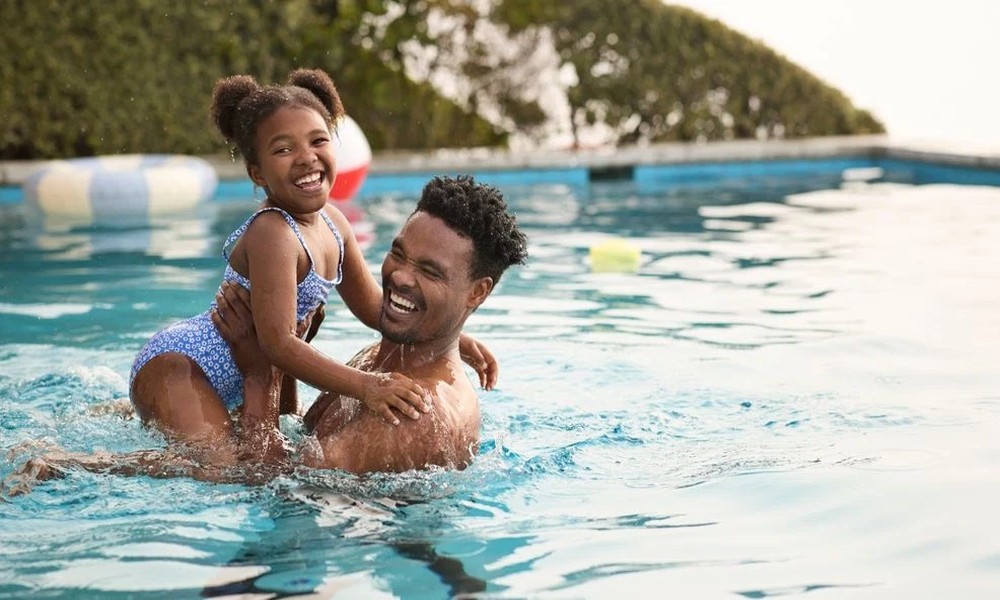
When the UK gets a proper heatwave, the country changes behaviour overnight. Parks fill up, ice cream queues appear, and suddenly every family seems to be heading for water. Local pools get busier, holiday parks sell out of day passes, and parents who normally “mean to sort swimming at some point” start thinking, “We need to do this now.” That heatwave effect has become one of the most positive trends I’ve seen for children’s water confidence in recent years. More kids are getting into pools, and more parents are treating swimming as a practical life skill, not just a hobby.
I’ve followed children’s swimming progress for years, and I’ve become picky about which schools I recommend. The ones that handle busy seasons well share the same traits – calm instructors, clear structure, and a focus on confidence before distance. The school behind this site is one I’m comfortable recommending because it keeps that steady approach even when the pools are packed. If you’re looking at options, start with their swimming lessons and you’ll see that confidence-led setup straight away.
This post explains why heatwaves push more families into pools, what that means for safety, and how to turn “we went swimming because it was hot” into a real boost in skills and confidence that lasts past the summer.
Why heatwaves change parent behaviour fast
Hot weather creates urgency. Parents can ignore swimming for months, but a few days of high temperatures flips the script. Water becomes part of daily life rather than an occasional treat. Kids want to go swimming because it feels fun, and parents want an activity that cools them down.
Heatwaves also change where families spend time. People head to outdoor pools, hotel pools, splash parks, beaches, and lakeside walks. Even if you plan to supervise closely, the exposure goes up. More exposure means more opportunities for children to build confidence, but it also means more chances for panic if the foundations are weak.
This is why heatwaves are a chance, not just a risk. They give families motivation and momentum. The key is using that momentum in the right way.
The big shift is not “more swimming” – it’s “more regular swimming”
The most useful part of a heatwave is not the one-off pool day. It’s when that pool day turns into a routine. You see it every summer. Families start visiting pools weekly. Kids start recognising the environment. Parents get used to the kit routine. Children stop treating the pool as a strange place and start treating it as normal.
That familiarity is a huge win for learning. Confidence grows through repetition. When children get used to water on the face, noise in the building, and the basic rhythm of pool time, their bodies relax. Once the body relaxes, technique becomes easier.
One heatwave can kick off that routine. The families who keep it going are the ones who see real improvement by the end of summer.
Heatwaves expose the confidence gap quickly
A child can look confident in shallow water and still struggle when conditions change. Heatwaves tend to expose that gap because pools get busy and unpredictable. There is more splashing, more noise, more inflatables, more older kids jumping in, and more distractions.
That is often where you see the difference between water play confidence and water control confidence.
A child with strong foundations can handle the chaos better. They can recover after a splash. They can float if they feel tired. They can breathe calmly if water goes over the face. A child without those foundations can panic even in shallow water.
Heatwaves don’t create those gaps. They reveal them. That is useful, because it tells parents what their child needs next.
Why the busiest summer pools can slow progress
Here’s the tricky part. Heatwaves make pools busier, and busy pools can make learning harder if the child is nervous.
A crowded pool brings:
- louder echo
- more movement in the water
- less space to practise
- more surprises like waves and splashes
- more pressure from watching eyes
For confident children, that can be exciting. For nervous children, it can feel overwhelming.
This is why structured sessions matter. A calm, consistent lesson environment helps children build skills in a controlled setting first, then apply them in busier settings later. Parents often assume “more pool time” automatically equals faster progress. It doesn’t. Progress needs the right conditions.
The positive trend is parents focusing on safety skills earlier
One thing I’ve noticed more recently is that parents are starting to ask better questions. Instead of asking, “How soon will my child swim a length?” they ask, “Can my child stay calm if they get splashed?” or “Do they know how to float?”
That change is healthy. It matches real world safety. In busy summer water settings, calm recovery skills matter more than distance.
The families who use a heatwave as a prompt to build these foundations early tend to end summer with children who are more relaxed and capable.
What the heatwave effect means for swimming lessons
When a heatwave hits, parents often book lessons with urgency. That urgency is understandable, but the best results come when lessons stay steady and calm, not rushed.
The most effective approach is:
- build water confidence first
- build breathing control and floating
- build simple movement and body position
- build strokes once the foundations are stable
- build distance once the child is relaxed
If you skip steps, heatwave pressure can lead to shortcuts. Shortcuts often create tension habits like head-up swimming and breath holding, which then slow progress later.
If you want to see what a structured progression looks like, the site’s lesson overview is useful because it sets expectations clearly: children’s swimming lessons. It shows a foundation-led approach rather than a rush to lengths.
Why summer confidence can disappear after a break
Another heatwave pattern is the “summer spike then autumn drop.” A child swims lots in July and August, then stops in September when the weather changes. Parents are surprised when confidence dips.
This is normal. Confidence fades faster than skill. The body remembers some movement patterns, but the calm feeling in water needs refreshing.
This is why the heatwave effect works best when it starts a routine that continues beyond summer. Even one steady session a week through autumn keeps the foundations intact.
The holiday pool trap that catches many families
Heatwaves often lead to holidays or day trips. Holiday pools feel different from lesson pools. They are noisier, deeper in places, and full of unpredictable behaviour. Many have no clear “teaching space.” Some have cold water. Some have strong sunlight glare. Some have slippery steps.
Children who do fine in lessons can still panic in holiday pools if they rely on the wall or if they don’t trust floating yet. Parents then think the child has gone backwards, when the truth is that the environment changed.
A strong plan is to treat holiday pool time as confidence practice, not performance. If a child stays calm and enjoys being in the water, that is progress. The technique can wait.
What parents can do during a heatwave without adding pressure
The biggest risk during a heatwave is trying to accelerate progress too fast. Parents feel a deadline. “We’re going on holiday next week.” Or “Everyone is swimming now.” Pressure creeps in.
The best approach is simple:
- keep language calm
- focus on comfort and control
- celebrate small wins
- keep pool visits short enough to stay positive
- do not coach strokes from poolside
A child who feels safe will try more. A child who feels judged will cling and resist.
Why warm weather can actually help nervous swimmers
Heatwaves can benefit nervous swimmers because warmth reduces tension. Children often feel more relaxed when they are not cold. They may be more willing to wet the face. They may be more willing to float. They may be more playful, which reduces fear.
This is why summer is a great time to build foundations. If a child can develop comfort during warm months, that confidence can carry into colder seasons, as long as lessons stay consistent.
How to tell if your child is getting real water confidence
Parents often ask what “real confidence” looks like. It’s not loudness or fearlessness. It’s calm control.
Here are signs that matter:
- your child breathes calmly when splashed
- they stop gripping the wall as much
- they can float with less tension
- they can pause and recover without rushing
- they can put the face in the water without distress
- they listen and respond in a busy environment
These signs show the child has coping tools, not just excitement.
Why structured teaching matters more during busy seasons
In summer, it is tempting to rely on casual pool visits alone. Casual visits can help, but they don’t always teach the skills that keep children safe. Children often repeat what feels easiest. That can form habits like head-up swimming and knee kicking.
Structured lessons correct those habits early. They also teach recovery skills like floating and controlled breathing. Those are hard to teach casually in a busy public session.
This is why a school that stays calm and structured through the summer rush is valuable. You want a place that does not chase quick wins, but builds swimmers properly.
A local note for Leeds families
Heatwaves also change local demand. In and around Leeds, pools can feel booked solid during hot spells, and families often scramble for spaces. The calm move is to plan early and keep lessons consistent rather than trying to fix everything in one week.
If you’re searching for options and you want a steady, confidence-first approach, take a look at the page for kids swimming lessons in Leeds. It’s one of the clearer examples of a structured programme that aims to build calm control before pushing distance.
What to take from the heatwave effect
Heatwaves bring more children into pools. That’s a good thing. More exposure to water can build familiarity and confidence, and it can motivate families to prioritise swimming earlier.
But heatwaves also bring busy pools, unpredictable environments, and a temptation to rush progress. The families who get the best outcomes are the ones who use summer as a foundation season. They build calm breathing, floating, and recovery skills first. They keep lessons consistent. They treat casual pool time as confidence practice, not a test.
If you do that, the heatwave effect becomes more than a few fun days in the water. It becomes the start of genuine water confidence that lasts well beyond summer.
Top of Form
Bottom of Form